by Will the Great
I am tormented by a demon and its name is Campaign-Level Play.
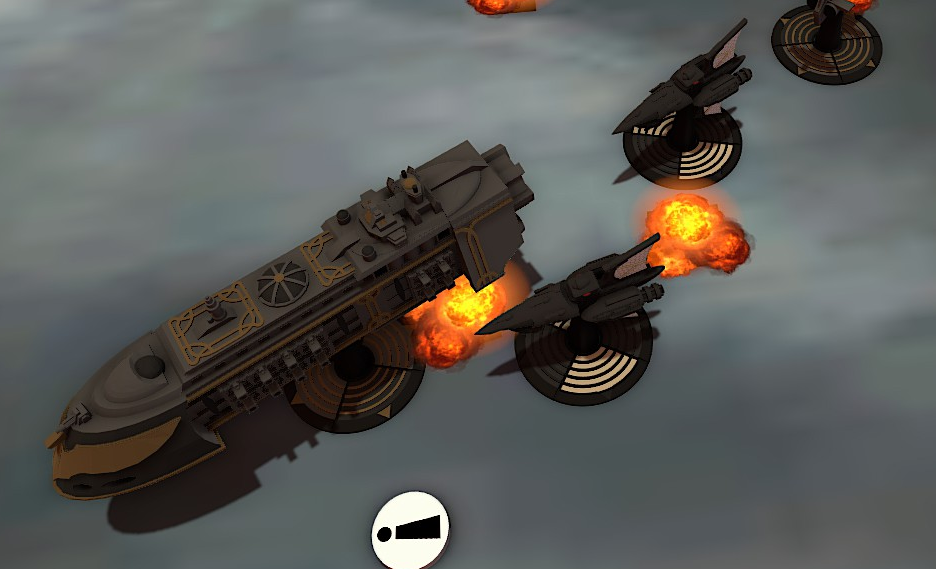
I’m going to talk about Battlefleet Gothic a bit, because it’s a game that I love very dearly and with which I have a very turbulent relationship. The specifics of the game aren’t important so I won’t be going over the rules or how to play – that may come in a later article – but if you hadn’t heard of it before today the elevator pitch is it’s a game of miniatures combat between enormous starships where things like maneuvering and inertia matter just as much if not more than dice and how many guns you brought. It’s also long out of print, which means unlike Games Workshop’s flagship products it doesn’t suffer from splat bloat and codex churn. That also means not as many people play it. If you’re interested, the BFG discord put together a starter kit which you can check out here (it even includes free STLs to print your own minis) and you can find the community remastered rulebooks and other materials at the BFG rules hub.
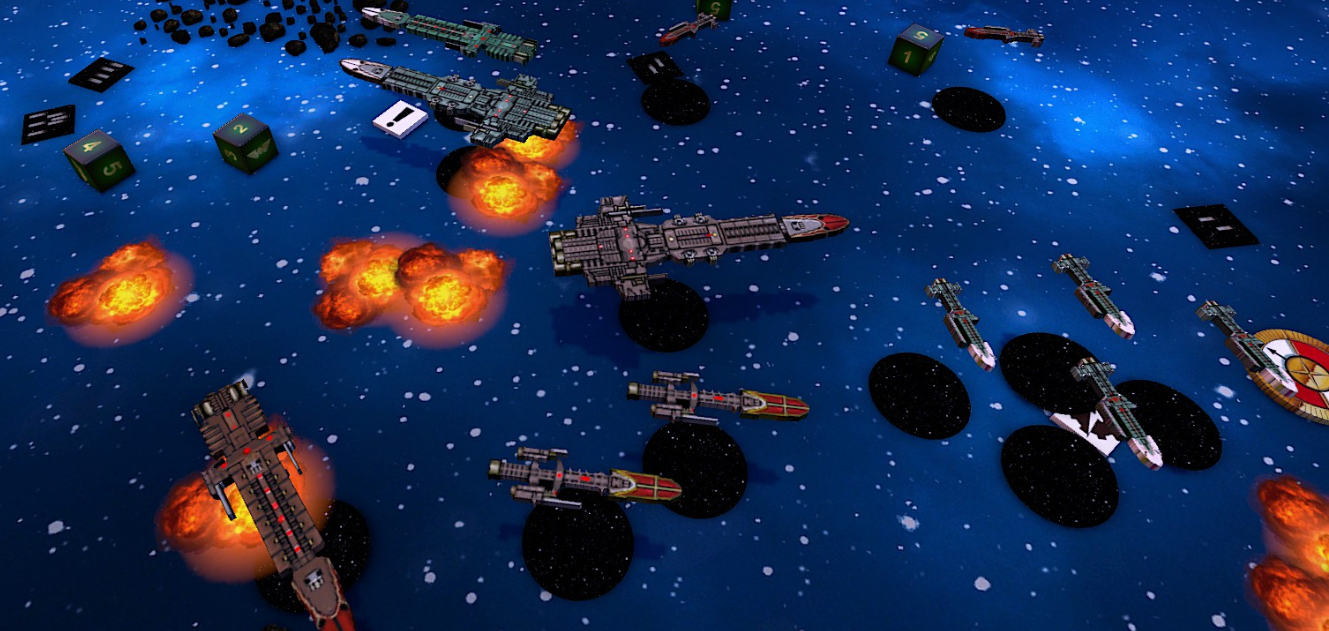
BFG is enjoyable as essentially a skirmish level wargame. It is streamlined and smooth to play, while boasting surprising tactical and strategic depth. And like many games set in the 41st Millennium it absolutely oozes aesthetic (I think the kids call this “aura farming” now). But as much as I enjoy a match, I find myself wanting more. I want to know why these fleets are clashing. I want to know the stakes. I desire context. I want my decisions here to have effects beyond the end of the match. I don’t just want to play the battle I want to play the war. I desire The Campaign.
A campaigns brings a weightiness that isn’t felt by one-off matches of a game, and that weightiness appeals to me. It’s hard to describe the difference exactly, but I’m betting some of you reading know that feeling. It’s different playing out a battle knowing that this one game is just a piece of a larger game on a larger scale. Victories are sweeter, the fear of defeat sharper. Ships that survive overwhelming odds become names of legend, losses are mourned and avenged. Your ships aren’t just plastic, they take on a character in an evolving story, For a game that can sometimes take hours to play, one might wonder at the wisdom of organizing and playing out a successive sequence of arranged matches between a number of different players, and indeed a typical campaign can take months to resolve. The Campaign is a long road, but it is a rewarding one.
Today we’re going to look at three ways to play a BFG campaign. I’m not going to reprint the rules for each but only give my thoughts and summary, but I will provide links and encourage you to read along as I go.
1. The Blue Book
The original 1999 printing of Battlefleet Gothic (known in the community as “The blue book“, pp 150) included rules for campaign play, and these are the rules that most people who have played at the campaign level have used. They are simple and functional, with a pre-arranged collection of sub-sector maps to use, rules for crew and admiral advancement, and a 3×6 table of ship upgrades to be obtained. Players took turns launching attacks on each other, and based on adjacency to systems they controlled could flip ownership from one side to another. There was a distinction drawn between “normal” and “raider” fleets, the latter of which could not hold territory but instead operated hidden pirate bases – the distinction was mostly for lore reasons. And like many wargames of the era, random chance was a factor – you rolled randomly for ship upgrades, you rolled randomly to see what type of battle you fought, you rolled randomly to obtain reinforcements, you even rolled randomly to see if you’d be allowed to capture territory – which wasn’t as aggravating as it sounds, because holding ground wasn’t how you won the campaign. Victory was…somewhat arbitrary but the writers suggested essentially a points scoreboard, on which the top admiral would be the winner after an agreed upon number of turns.
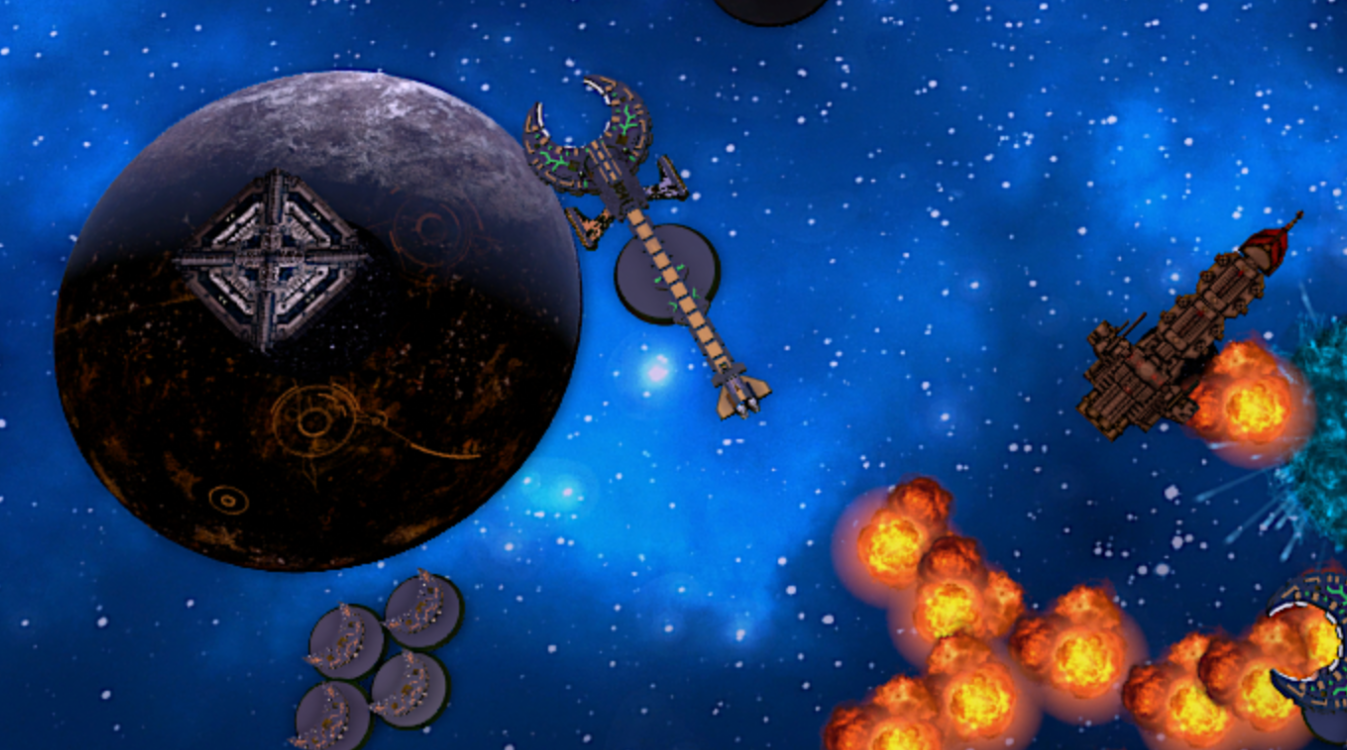
(Armada expanded on the rules to cover the new factions added by the expansion, and both sets were eventually consolidated into the Remastered Rulebook, but from a game design standpoint there is no difference between the blue and yellow books and the modern Remastered.)
The default campaign rules are somewhat antiquated by the standards of modern game design, especially in the use of random chance as a balancing factor, and the value of holding planets is primarily in repairing damage between battles – holding more planets than your opponent, in fact, gives them an edge against you when setting up the next match. Something about having to spread to cover more territory, honestly much of the specifics of the campaign rules are abstractions for a layer of logistics and planning that isn’t really present. Ships just appear in the location where battles happen, with no worrying about plotting warp routes or travelling from one end of the subsector to the other. This is because the rules aren’t about planning and logistics at that scale, they are, quite transparently, a framework for having a series of matches between players where the outcomes of each bleed into and affect the next. The campaign rules as written in the blue book are an excuse to get your friends together and play BFG. It isn’t intended to be an in-depth game of strategic management and interstellar conquest. And that’s just fine.
A wiser man than me once said “focus equals quality”. The blue book campaign focuses on what’s important, and that’s putting ships on the table and rolling dice. Everything else is in service of that goal. Everything else is secondary.
2. The Vagaries of War
In 2003 Nate Montes and Bob Henderson published the “Vagaries of War” campaign rules in BFG Magazine issue 17 pp 28. Nate’s own forward to these rules describe a desire to bring strategic complexity to the blue book campaign by making movement and map position more impactful between battles. These rules function very similarly, except that one side is the invader who must break out from a point of entry and exert control across the map, while the other is the defender who begins spread thin and must decide whether to fight and slow the advance or withdraw and regroup, ceding territory in the hopes of a later return. As with the blue book control of planets matters chiefly for repairing damage and replacing losses between battles, but unlike the blue book a Vagaries campaign is fought to elimination or surrender. Also unlike the blue book, the positions of ships are recorded between matches, with some rules for moving between systems with an element of increasing random mishap the further they try to travel in a single turn.
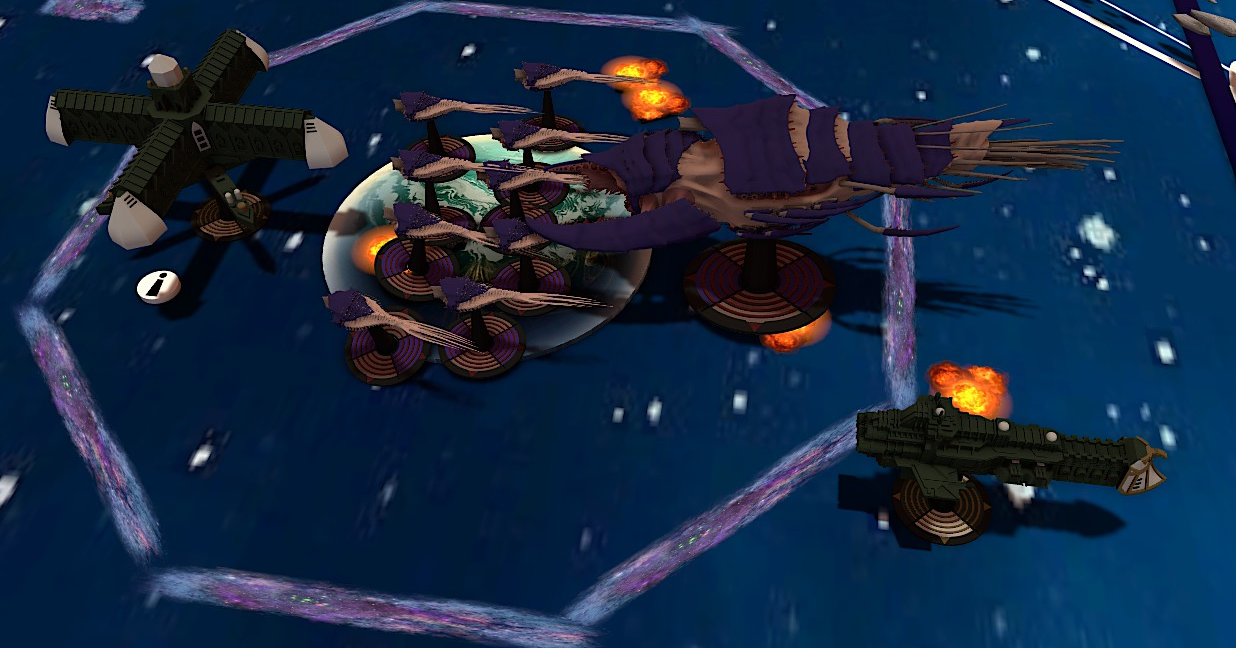
One significant difference is that while the blue book campaign can be run with theoretically any number of players, a Vagaries campaign seems to work with only two – or at least with two teams. Nate and Bob don’t appear to even consider the possibility of running the system with more than two competing parties.
Vagaries is essentially a blue book campaign where fleet locations matter, but everything else is much the same. Among other things this means that some battles could end up one-sided, a lone patrol ambushed by a massive squadron – Nate insists that this makes for more interesting and engaging matches, a desperate running battle against overwhelming odds could turn into an astonishing victory with a lucky (or unlucky) roll of the dice. If nothing else scoring in BFG has adjustments for battling a numerically superior force, meaning it is quite possible to retreat and still win the match if you do well enough – and with damage and losses persistent between matches it’s certainly not a waste of anyone’s time to play out a few rounds of shooting in the hopes of damaging your enemy’s flagship before retreating.
Thus, while a blue book campaign will always be fought with, for lack of a better term, balanced forces, the inherent imbalance of a Vagaries match exists only at the tactical level. Vagaries is still a game about spaceships battling, but it’s more complex and that complexity has shifted the focus off the table and onto the strategic map. That’s an improvement, isn’t it?
3. Goya’s Masterpiece
Also in 2003, on the now defunct portmaw.com forums, Lyndon Hardy aka “Goya” published what he titled the Battlefleet Gothic Advanced Campaign Rules. Termed “Goya’s masterpiece” by the BFG community, the ACR is not so much an add-on to the blue book but a total conversion, a complete campaign layer made from whole cloth. Like Vagaries, positioning and travel are factors that matter to the strategic map – ACR has detailed rules for travel along warp lanes, with travel times and mishap chances that change depending on the faction (unsurprisingly Eldar have the easiest time). In-system travel is also modeled based on the speed of the slowest ship in a group – this is a significant departure from the blue book where the specific contents of a star system existed only in the abstract, to be randomly generated at the table only when the celestial phenomena table deemed it necessary. Goya offers no guidance for how to set up a campaign map with fixed star system contents, but when I ran this it wasn’t too hard to adapt the celestials table into a “random system generator” role.
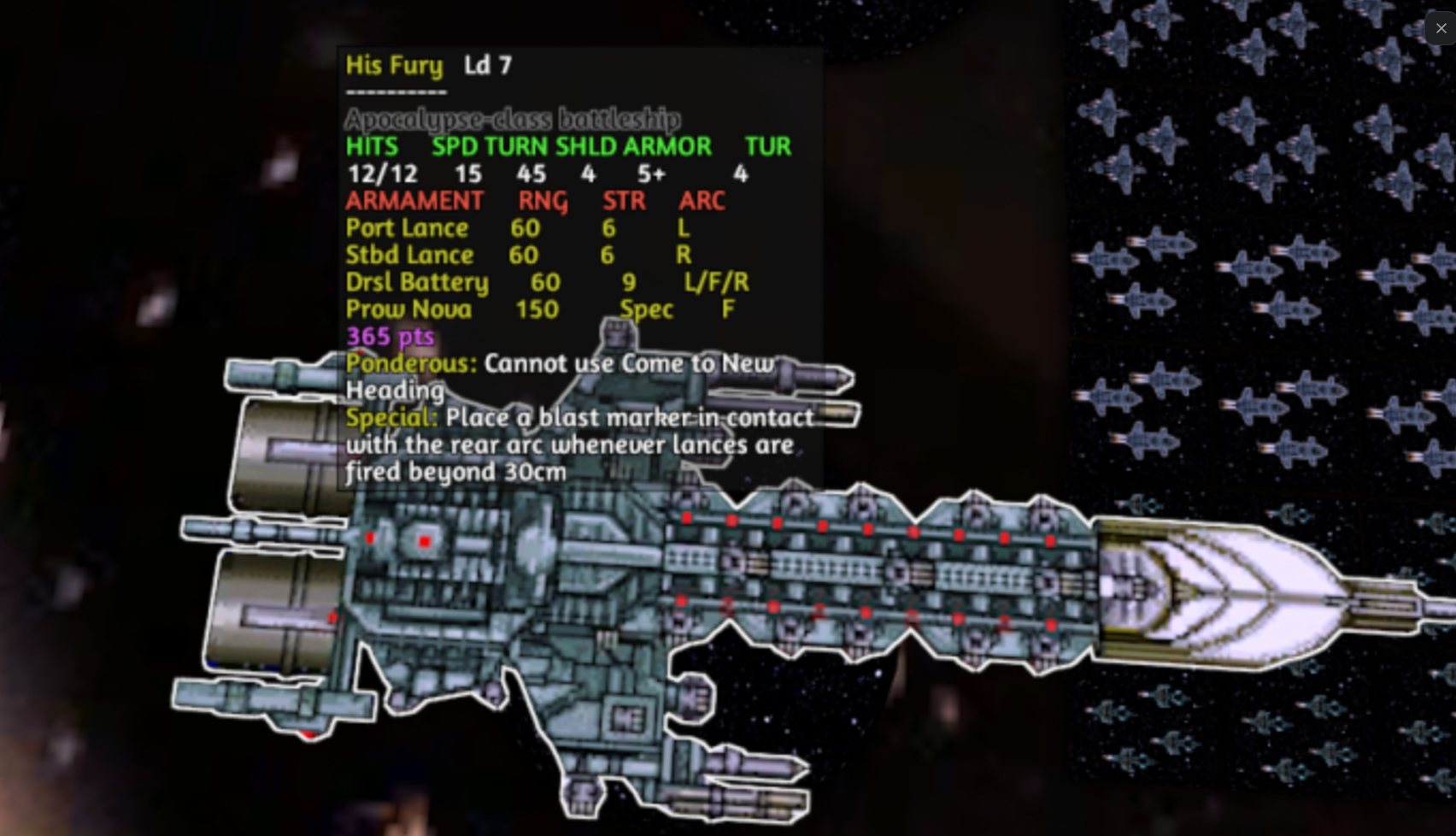
Another departure is that in ACR, planets are extremely important. ACR doesn’t use the random appeals tables for reinforcements or ship upgrades, here those things come directly from the planets and star systems you hold. Planets generate resources, which your transports and warships then have to move to a space dock where they can be spent on construction or repairs. This also adds a strategic layer in that convoys between systems are a target your enemies can raid. There’s a system of fleet-level orders you can give that determine their function for the turn and reaction to other entities that enter their zone of control. There’s a fog of war layer and rules for scouting and observation, which as you can imagine necessitates someone to act as a campaign-master role (presumably they don’t get to play themselves, though Goya doesn’t specifically disallow it). There’s some other fun lore-based special things that Necrons and Tyranids can do which sound complicated and, I’m not sure is better than just building and resource harvesting normally. And lastly, unlike the blue book, orbital defenses and planetary troops aren’t things given to you by the scenario setup, they’re things you have to specifically pay for build and transport to where they’re needed.
ACR is the most radical departure from the BFG campaign formula of the many rulesets I’ve encountered. It’s a whole game unto itself. ACR is a proper 4X grand strategy game which just uses Battlefleet Gothic as its space combat layer. In that sense it’s the inverse of a traditional campaign – it’s not an excuse to play the game, it is the game, and with travel time in systems being measured in the multiples of turns – the fastest transit possible is three whole turns – the 4X grand strategy layer is the only game its players will be playing for the majority of turns.
The community calls ACR “Goya’s Masterpiece”, but personally I think a better moniker is “Goya’s Folly”. Systems and mechanics exist which reflect in-universe lore and add complexity, but having attempted to play it I don’t think much thought was given to how good of a game they made, let alone if they were “balanced”. What Lyndon wrote is certainly impressive and there is a lot of good game design in here, but I think he got lost in the weeds and forgot why people like to play Battlefleet Gothic. The Advanced Campaign Rules are a near perfect inverse of the blue book campaign in their approach to game design. Goya’s Folly shows why greater complexity is not a synonym for greater fun.
4. Synthesis
Having looked at the three best known examples of campaign play, I would conclude the following: that complexity can add depth, but must be added in the correct place and the correct amount. A campaign layer for any game must ultimately serve to enable playing the game it’s attached to, rather than replace it. A campaign layer is unfit for purpose if it sidelines the game it’s designed for.
How then can this lesson be applied? Can we take the design philosophy of Vagaries of War, adapt the best and most functional parts of the ACR, and discard the antiquated elements of the blue book campaign into a new system? Watch this space – next time we’ll discuss a little project of my own I’ve been working on.
 Will the Great is editor, erstwhile games journo, and part-time shitposter for the Legionnaire. He enjoys pineapple on pizza and movies about sailing ships.