
by Deputy
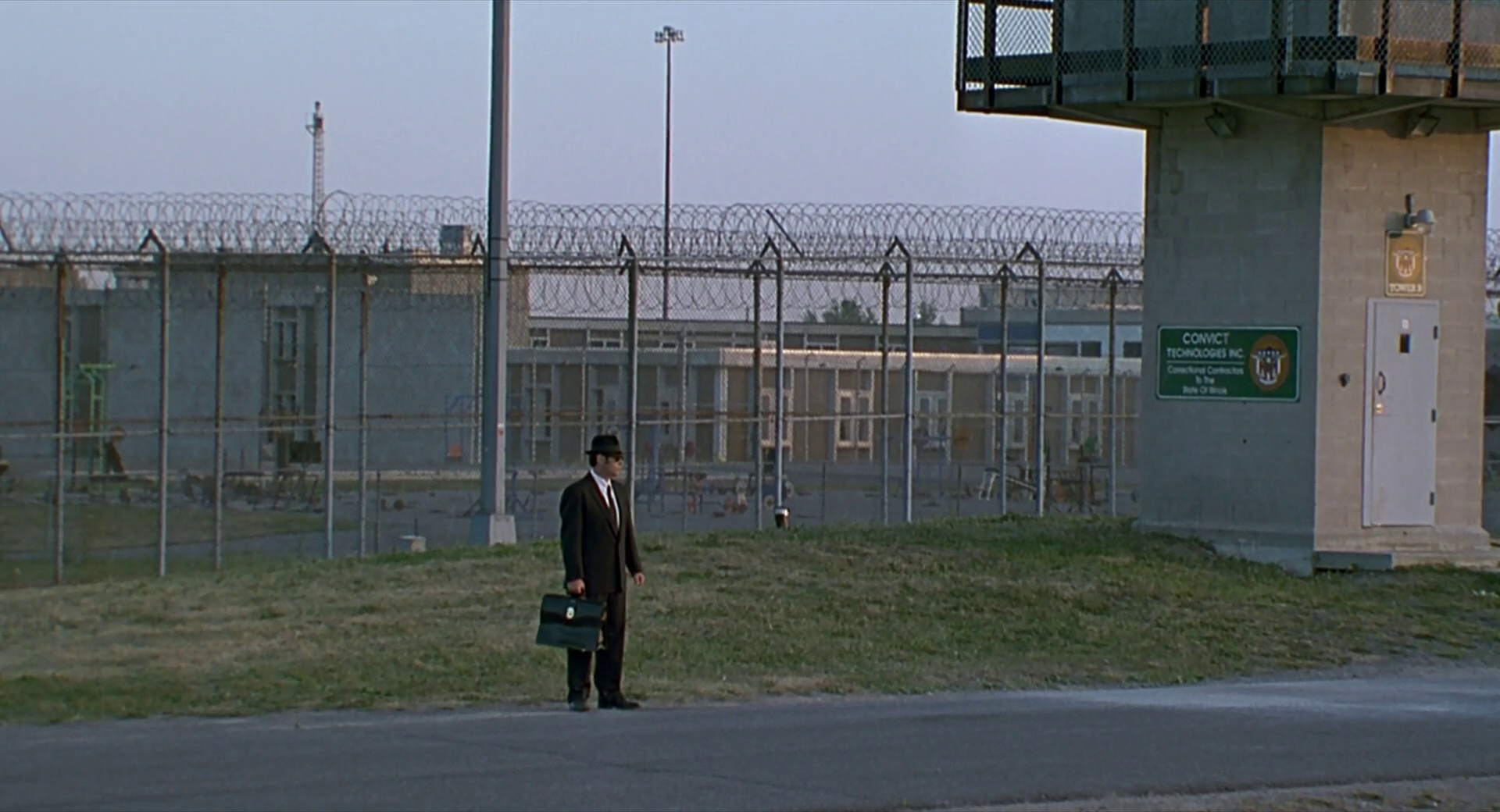
Rewind all the way back to 1998. A Big Mac combo was about $2.40, gas was under a dollar, and the future looked bright. “The Fast and the Furious” with it’s twelve sequels and two offshoot films was three years away, and it would be a whole decade until “Iron Man” came out and the concept of an extended universe made shareholders see dollar signs. In this, the last few good years before September 11th set this country on it’s current course, one of the best comedies to come out of Saturday Night Live (SNL) got an “oh god why” sequel eighteen years after the original, with half the cast, a kid sidekick, and a PG-13 rating. It is largely forgotten today.
Now, I have talked about bad movies pretty much exclusively in this column or whatever it is. And I’ll be frank here, The Blues Brothers 2000 is a bad film. The plot is meandering, the dialogue is awful, and the supernatural parts kinda show up without warning and then leave as suddenly. But for all it’s faults, the movie is one that I loved as a kid. I saw this one before I had seen the original, mostly because my grandparents had 6 films on VHS – Robocop, The Blues Brothers 2000, Who Framed Roger Rabbit, and the Star Wars trilogy back when there was just the one of those.
Dan Aykroyd’s original pitch for this film way back when was shelved when John Belushi died. He went on to adapt several of the other things he had Belushi in mind for, such as Ghostbusters and Spies like Us, both fantastic films in their own right and classics of their era. Poured himself into his work and became one of the beloved comedians of film. Got really weird about both cheap vodka and all manner of the goofy kind of conspiracy theories, which he takes exceptionally seriously. But he didn’t put the sunglasses and hat back on for nearly fourteen years. He’s said in many interviews that he didn’t think he could do it without John Belushi. The two of them shared a friendship rooted in a deep appreciation of the Blues, a childhood passion of Aykroyd’s that he may have introduced Belushi to. It was always a two man act, and the second man was gone.
Going even further back, the Blues Brothers were not all that well received when they started in the mid 70s. Disco was king, the primordial stew of electronic music was rapidly growing into new genres like dance, techno, and New Wave and influencing the rest. The Blues greats were aging, their stars well past the height of fame’s parabolic arc, and here come two snot nose kids on SNL pretending to be old school blues men. They had the parody down – the old style 60s suits and hats, the white socks, John Lee Hooker’s RayBan sunglasses. Belushi even grew the soul patch. Each of their on stage personas was crafted with little flairs of personality aping the old greats, and a lot of people inside and outside of music were not flattered by the imitation.
When they pulled in some of the biggest names in music to back the act for the film, those guys got flak from their peers who felt they had sold out to Hollywood, had signed up for a clown show making fun of the art and the artists themselves. It took time and effort to turn that around, with the film, then a live album, opening for the Grateful Dead, a studio album, and a second live album. Aykroyd and Belushi would invite their critics to shows, to try and show them first hand that it was a loving tribute, not a vicious mockery. They got a head of steam going. They won over their detractors. They made a best selling film, and then a platimun record. The Blues Brothers were going places. Then, all of a sudden the momentum came crashing to a halt when Belushi died. But this groundwork is the reason that when Aykroyd started performing as Elwood again in the early 90s, with John’s brother Jim Belushi opposite him, that people took it seriously. And when he said he wanted another Blues Brothers film, he and John Landis, who would direct again, got the reluctant green light for it from the studios.
There were some immediate roadblocks, pun fully intended. the Chicago Police Department (PD) refused to have anything to do with the film, having famously stopped all appearances by Chicago PD in film after they were portrayed in the first film. Several other cast members had passed in the intervening time, most notably Cab Calloway and John Candy. Jim Belushi was the natural choice to star opposite Aykroyd, but he had other acting commitments and was (allegedly) under a restrictive exclusivity contract. Several other names were floated for the opposite role, when John Goodman made contact and stated he wanted to be involved in any way possible. He wanted a cameo as a cop, a highway worker, whatever, just so long as he got to be involved and on set with the band.
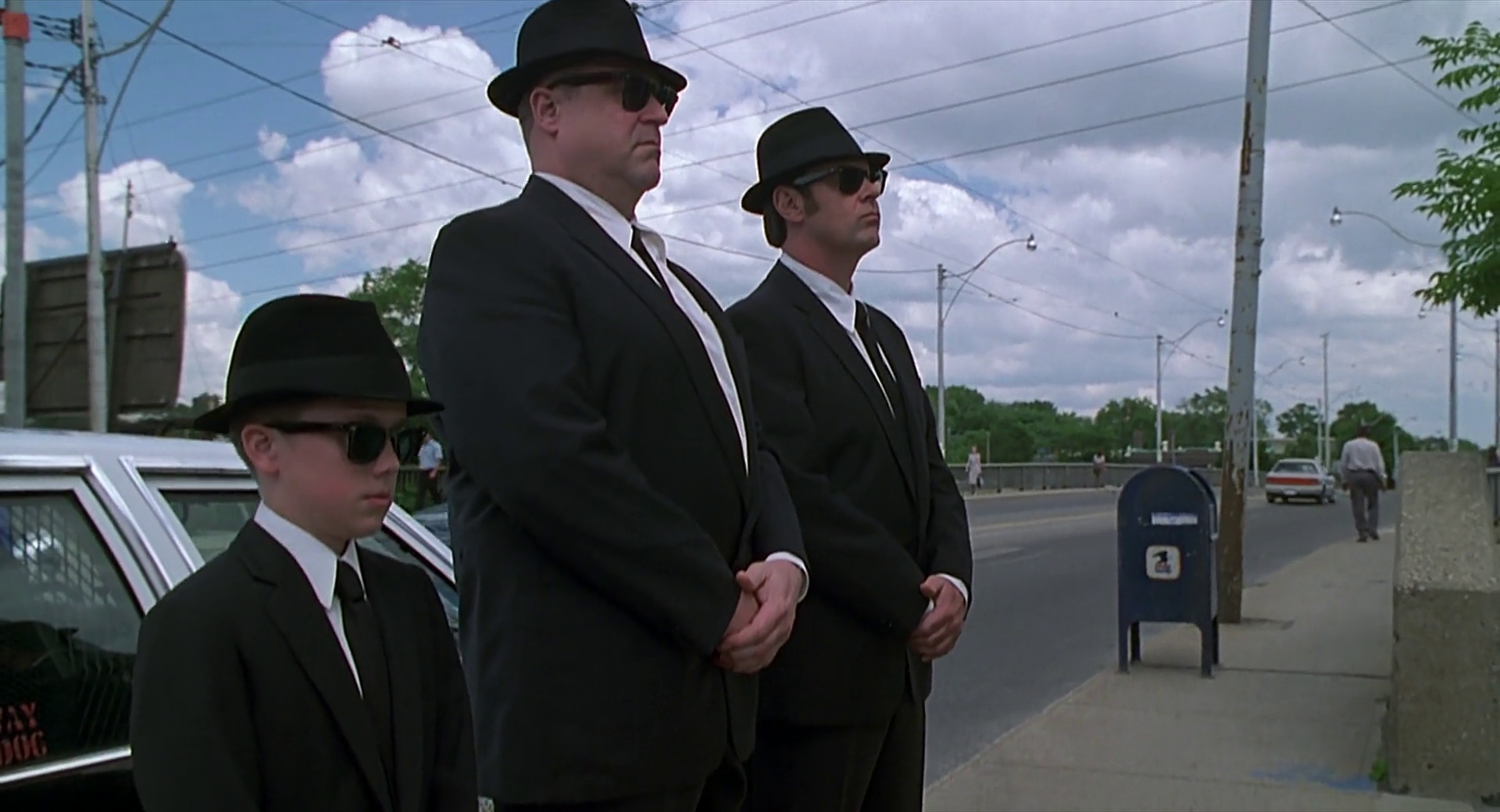
Universal Studios wouldn’t let one of Hollywood’s ascendant stars just cameo though, so Goodman was proposed for top billing. Aykroyd had liked Goodman’s singing in King Ralph (1991) so Goodman performed with the band on stage from 1994 onward and even appeared as a Blues Brother on SNL in ’95, eventually investing in Aykroyd’s “House of Blues” nighclubs across the country. They said it felt good so they went with it. The script underwent many rewrites as the plot John Landis and Aykroyd had written heavily featured Burton Mercer (John Candy), Elwood’s Parole Officer from the first film, chasing and eventually becoming a Blues Brother. This part in the film would go to Joe Morton’s Officer Cable. The film was forced into a PG13 rating which eliminated any cussing, nudity or violence (the original was rated M for language), and the studio refused to fund it if there was no kid sidekick, which was originally written with McCaulay Culkin in mind but he aged out over the extended pre-production and rewrites.
Landis didn’t push back because he was certain the studio would just can the film if it became troublesome. Universal had not been all that interested to start but was swayed by the legacy left by The Blues Brothers. There was an argument to be made that the generation which grew up watching The Blues Brothers was now the prime age to spend money. They paid for the film, a tie-in video game, and a lavish amount of promotion in the lead-up. In exchange, they wanted very tight control over the script. Landis would later say in a 2004 interview about the changes, a quote I try to keep in mind for every day life: “You know the difference between a brown noser and a shithead? Depth perception.” He goes on to explain that successive re-writes had ground all the edges off the script to make it as bland, safe, and palatable as possible. But Aykroyd told him on every incremental change that it didn’t matter, this was about the music.
Aykroyd wanted to get the performers on stage, on film, to document one last celebration of the great American songbook before its sun set forever. The first film had five musical guests – John Lee Hooker, Cab Calloway, Aretha Franklin, Ray Charles, and James Brown. Each is a knockout performance, some of the best of those artists careers, and the music makes that film as much as anything. Cab Calloway’s Minnie the Moocher from this film is still a favorite of mine to this day.
Anyway, The Blues Brothers 2000. The plot is a device to get us from one musical number to the next, and it is barely up to that meager task. Buster Blues (the kid, played by J. Evan Bonifant) is clearly tacked-on and/or shoehorned into every scene and many performances, thankfully just miming harmonica for most but not all. John Goodman is frankly underutilized by the script and seems almost despondent in later interviews about the film, although he does put up a good performance musically. Dan Aykroyd’s portrayal of Elwood has come full circle from being silent in the original SNL skits to giving multiple, several minute long tirades. One of the major plot beats is that Elwood gives up on the band for five minutes, loses sight of the music and walks away, and Buster comes and talks him back.
Speaking of, what did you like in the first film? The police pile-up? This one is bigger by exactly one car. The Bluesmobile doing nearly magical stunts? Elwood drives the new one underwater and by remote control. Bob from Bob’s Country Bunker? Here’s here for some reason. The orphanage? Closed, the first film didn’t save it which is depressingly realistic. BB King pretending to own a junkyard? That one is new, you liar. You liked the music? Well, fine then, we can talk about the music.
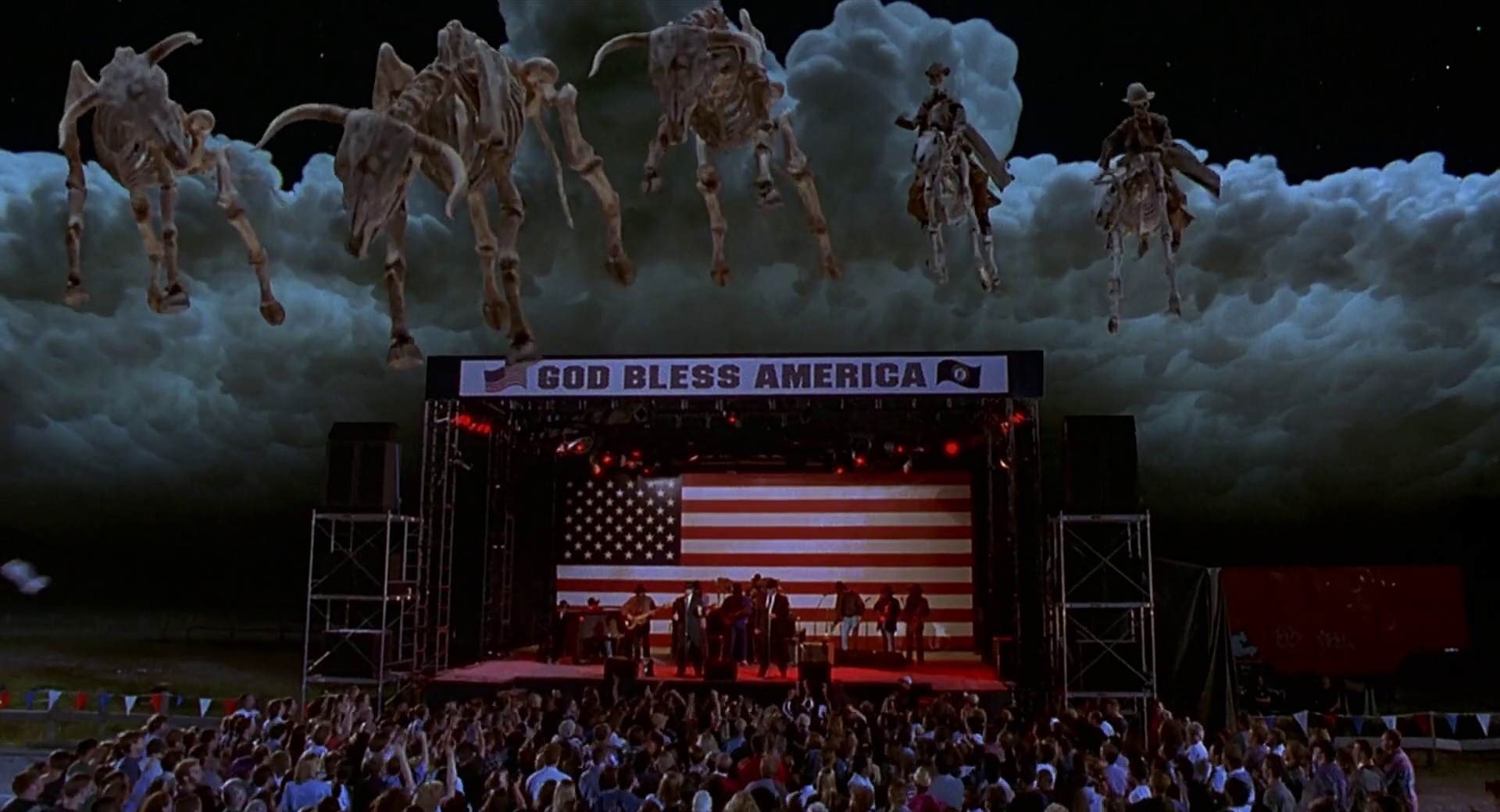
The music really is the star here, and it’s clear that Landis and Aykroyd made the correct choice to protect it at any costs. I’ll be honest, Dan Aykroyd is the weakest singer in the film and it shows much more in this film than the first. A sizeable portion of the 30-million-dollar budget went to the “Riders in the Sky” sequence which is frankly still a decent visual if you can ignore the Russian mob sniper getting electrocuted near the end (Don’t worry, it’s PG-13 so he just T-poses when it happens). It’s done with puppetry which I find a lot more charming now that I have seen the other side of the CGI curtain.
The soundtrack is much wider in scope and deeper in depth than the first film. If the first had cameos by the five greatest of the genre, this film has pretty much everybody else. Blues Brothers 2000 has eighteen musical cameos including returning guests of the first film. Eric Clapton? Blues Traveler? BB King I mentioned earlier, and Junior Wells and Travis Tritt a dozen others I won’t list here because you can find that yourself. There’s a post credits performance by James Brown because John Landis had filmed it but could no longer fit it into the plot anywhere and it was too good to leave on the cutting room floor. It’s a weird, eclectic but somehow cohesive sound spread across all 123 minutes of the film. This film was a profound thing for a four-or-five-year-old to experience, and it helped me to broaden my musical tastes far beyond the country station every car and truck radio was tuned to in my youth. For that alone, it will always have a special place.
Despite all of this, it’s a bad film as I said. It’s a bad sequel, more bit parts and cameos than plot and dialogue, and one that should have been an alarm bell of the bad sequels to come as soft reboots, hard reboots, cinematic universes and revived franchises began to rapidly follow it. Dan Aykroyd calls it “little G good” because it was a shitty film but a good soundtrack. He says he’s proud of it in the end, and that is good. The music is great and despite it being great, it can’t carry it as a film. They’d have been better off stripping the rest of the plot out for 2 more guest performances and calling it a day.
As a film, I can’t really recommend you watch it. Certainly, don’t pay for it; everyone who deserves money for this is long since out the game one way or another. The hole left by Belushi’s absence is vast, and Goodman, Aykroyd, Joe Morton, young Mr. Bonifant, none of them can do more than silhouette themselves against that gaping void, which yawns wide in every scene. But at the same time, Belushi’s impact is all over this film. Its very existence is because of the impact Aykroyd and Belushi made. John Goodman wanted to be on the project because of that legacy. they got almost every living Blues great for the film, and the handful of rock, country, and other musicians, on that impact alone. Because Dan Aykroyd and John Belushi put in the effort to make it more than a facade, because their love of music did shine through.
I have been ruminating on legacy as I said. Thinking on the mark we make in the short time we are given, pondering what we leave behind in what feels like an increasingly shallow and vapid world. In the end, for giving it a very imperfect try, I think Blues Brothers 2000 makes the cut as art. Anyway, if you are ever sitting around and want to listen to the last hurrah of some of America’s greatest artists? An album that is a jam session in all but name? Maybe put the Blues Brothers 2000 soundtrack on. It doesn’t get a lot of respect compared to others, but maybe it ought to, you know? For the music.
Postscript: John Landis said that Dan Aykroyd has bounced several awful Blues Brothers 3 scripts off him over the last 25 years. Now that the Ghostbusters sequels are gaining a tiny bit of traction, we could very well see “The Blues Brothers 3: Blues Sisters” or “the Blues Brothers 3: Jake’s lost Albanian Brother” (both actual pitches he named). Be forewarned.
 Deputy is a recluse who would prefer not to be known but is dragged, kicking and screaming, into participation by Tex on occasion. Picture is unrelated.